Sunday, February 28, 2016

Weekly Blog 2/22 - 2/28 - Gray Area River Investigation

Image Source:


Summary: 

    To survive, fish need food, clean water, clean environment, biodiversity, the right temperature for water, level of light, and oxygen. Some of the facilities near the Gray Area River may be causing the fish to die. The dams near the river may be killing off the fish's food, making them starve and forestry might cause erosion, making the fish blind and disable them from eating food. Boats might cause shade and change the required light for fish, and dams will probably affect the right temperature for the fish. Damming and forestry may be killing off the fish, destroying the biodiversity, and forestry might cause erosion, suffocating the fish. These are examples of things around the Gray Area River that might be killing the fish and other inhabitants of the river.


SP7: Arguing From Evidence:

   I used evidence to defend my explanation. I answered that The Waterslide in the Gray Area was the facility most likely to be polluting the Gray Area River, providing that the fish started dying in the river following the Water Slide's creation. If other factors, such as logging and oil factories caused the fish to die, it would have happened as soon as that event happened. For example, the oil factories were built nearly 20 years ago, yet the fish started dying 5 years ago. If the oil factories caused the fish to die, wouldn't the fish start dying 20 years ago instead of 5 years ago? Also, other cases show that the Waterslide is causing the fish to die. The Bench Press News showed that Waterslide workers spilled about 250 gallons of chlorine into the Gray Area River, which caused the fish to start dying. Also, an experiment conducted by Juan Tuno showed that there were plenty of water fleas, vulnerable to chlorine, were found upstream the river where the Water slide might have spilled chlorine into, which meant that there was no chlorine there. This makes sense because the Waterslide is found near the downstream of the river, and not upstream. Juan Tuno also tested the amount of water fleas downstream the river, and found little to no water fleas, which meant that they must have died to the chlorine, showing that the Waterslide may have caused the fish's death. 

Crosscutting Concepts: Cause and Effect:

     To begin with, the Cause of the fish dying is probably because of the Waterslide pouring about 250 gallons of chlorine into the Gray Area River, and the Effect of the Cause is the fish dying. I can prove the relation ship between this Cause and Effect due to many sources showing that the Waterslide dumped chlorine into the river. One main source that shows that the Waterslide poured chlorine into the river is the emails that the Waterslide employees sent each other. One Waterslide employee said that they were going to dump a box full of water fleas into the river before 'the boy' (referring to Juan Tuno), in attempt to prove that the water was healthy. That action still didn't seem to do anything, since Juan Tuno still showed that there were very little water fleas downstream of the river, which meant that there might be chlorine in the river, killing the fish. One of the employees/employers also said that they hired a chemist to test the water on Tuesday night to test the river. During Tuesday night, the Waterslide also poured water from the river into holding tanks, and treated it with chlorine. This may have been done to hide the chemist from finding any chlorine from the river, due to the Waterslide consuming some of the river's water. 

Sunday, February 14, 2016

Weekly Blog 2/8 - 2/14 - The Rio Grande River


Summary:

The Rio Grande River source is located at the Rocky Mountains, south of Colorado. It then flows South East, through New Mexico, Texas and Mexico, making a border between Texas and Mexico, and flowing out of the mouth, located at the Gulf of Mexico. The Rio Grande has some history to it. It was used by several Native American tribes as a water source, and then was explored by two European explorers. After the two  European explorers explored the river, the river was given the name: the Rio Grande. In the mid 1800s, The Rio Grande became the border between Texas and Mexico from the Treaty of Guadalupe Hidalgo. Today, the Rio Grande is used for agriculture and farming (agriculture near the river has made millions of dollars). There are also dams built along the river such as the Elephant Butte Dam.

SP8: Obtain, Evaluate, and Communicate Information:

This week, I obtained data of the Rio Grande (such as its history, structures built near it, economic significances, etc.) by going to many sites including information about the Rio Grande. To ensure that the data that I obtained was correct, I tried finding other sites with the same information my source had. Once at least two or three sites had the same piece of information, I knew that the data I obtained was correct. I communicated the data I obtained with my teammates. I also communicated obtained data through research documents, and our script.  


Sunday, February 7, 2016

Weekly Blog 2/1 - 2/7 - Source to Mouth


Summary:

The Rio Grande river has a length of 1,896 miles. The Rio Grande river is one of the biggest Rivers in North America, It is located between southern Colorado and Texas. The Rio Grande river became the border between Texas and Mexico since the 1800s. There were many uses for this river and there still is many uses for this river. It was used for a water source for Native Americans. It was also used for agriculture and farming, which was a popular job to do near the Rio Grande River and. Another use for this river used today is for damming.


SP8: Obtain, Evaluate, and Communicate Information:

This week, I obtained all my data from researching the Cultural Significances of the Rio Grande (such as what kind of cities were built there, what was the river used for in the past, etc.), using provided websites, or finding other sites about the Rio Grande and its Cultural Significance. I evaluated the validity of my information by gathering information on a few sites about the Rio Grande and its Cultural Significance, in which all of them had the same data, which means the data I gathered on the Rio Grande was correct.

Friday, January 29, 2016

WAC - The Three Gorges Dam

The Three Gorges Dam

     In 2012, China finished making the 'Three Gorges Dam', a hydro electric dam that produces clean electricity, to go green. China plans to build three more colossal, hydro-electric dams. China should not build more hydro electric dams due to the many downsides the construction of the dam has caused. The building of the dam has caused more downsides than benefits. 

       One reason China should not build more colossal, hydro electric dams is because that the first construction of the dam has destroyed many artifacts. Archaeological and historical artifacts have been destroyed due to the dam's construction. 'Dragon Bone Cave', near the Three Gorges, contained many human fossils and historical artifacts. The cave is no longer accessible due to the Three Gorges Dam construction. This examples are important reasons of why China should not build any more colossal hydro-electric dams- historical artifacts, that could have been used to learn more about early culture, was destroyed due to the dam's construction.

     Another reason China should not build more colossal hydro-electric dams is that the construction of the dam affected many people, 1.4 million in fact. It says that "More than 1.4 million people had to leave their family homes with little financial assistance." Many people had to leave their homes, find new trades, and had little money. This is an important example of why China should not build more hydro electric dams because the people were moved out of their family homes, had to find new homes, learn new trades, and had little financial assistance, which is a big problem for the people.

      One other reason China should not build hydro electric dams is because the construction of the Three Gorges Dam damaged the environment and wildlife. Since the dam was built, wildlife and environment were damaged and due to the lack of trees, severe erosion was caused, which may have caused damage and money to repair it. This example is important to my claim because if China builds more dams, more damage, erosion, and environment/habitat will be damaged.

     In conclusion, China should not build anymore colossal hydro-electric dams. If China does not build anymore hydro-electric dams, it will save historical and archeological artifacts from being damaged. It can also save the environment and cause less damage due to erosion. One last benefit of China not building anymore dams is that the people won't have to move, learn new trades, find new homes, etc, which can satisfy the people. To sum it all up, China not building anymore dams would save artifacts, the environment, and satisfy the people. 

Sunday, December 20, 2015

Charity Fair - Project Blog - 11/14 - 11/18


Summary:

Before donating to a charity, you should learn things about it. Things you should know about a charity before donating to it are: their name, what they do, and their mission. Other things you should consider are their statistics in money, such as how much they give and money to raise $100. You should also research on what they have achieved, and what they are currently doing.

Backward Looking:

How much did you know about the subject before I started? I knew a few things about the charity fair project before I started this year, last year. Things I knew about the charity fair last year was that you had to make and sell items you made, and then with the money you have, you donate it to a charity of your choice. Things have gone a bit different with the charity fair this year. I've known some of it before we started. For example, instead of donating to a charity of your choice, you must convince the student council to donate all AdVENTURE's money to one charity, making a presentation/speech. Other things that are different include adding different elements, such as carbon footprint, cost & profit, etc.


Inward Looking:

How do you feel about this piece of work? What parts of it do you particularly like? Dislike? Why? What did/do you enjoy about this piece or work? I thought that the charity fair was really fun to do, making the products and the elements, and working on the tri-fold poster. My most favorite part of the charity fair would either be making the products(origami) or developing the tri-fold poster. The part I dislike doing for the charity fair was doing the carbon footprint. This was because it was really difficult to do, because some of the products we used didn't show where it was made, taking a long time to finish the carbon footprint, and took a lot of hard work to finish. The part I like most about this project is making the origami and doing the tri-fold poster, since this was the part I was most proud of

Outward Looking:

What grade would you give it? Why? If I were to grade my own charity fair project, I would give it an A. I would give it this grade because I think I did pretty well for the charity fair by adding all the elements with all of requirements, with a bit of extra data. I also think I did pretty well on the tri-fold poster with detailing it. But the main reason I would give myself an A is because of the products. The main reason I would give myself an A is because of the collaboration my team and I did during the charity fair. We communicated when doing all of the elements of the charity fair, talked about all of the requirements and what to do. Saying this, I wouldn't really say that I did really really good on the charity project. There were a bit of some flaws, like miscalculations and making a few mistakes for the cost and profit and carbon footprint.  

Forward Looking:

What would you change if you had a chance to do this piece over again? There are many things that I would change if I were to to do the charity fair project again. One thing I would change is the product I was selling. I was originally selling origami, but that did not sell much on exhibition night. If I were to sell something different in the charity fair than origami, I would sell something that you could bake, like cookies or cake pops. There aren't many things I would change if I were to do the charity fair again, besides doing some of the charity fair elements again, since I would be selling a new product.


Sunday, December 13, 2015

Weekly Blog 12/7 - 12/11 - Dirt On Soil


Summary: 

Soil erosion usually destroys things, like farms, and causes mudslides. There are many ways to prevent soil erosion. One way is to have plants dig into the soil instead of having trenches. Plants hold down the soil with their roots. Another way to reduce soil erosion is having low incline. That prevents the soil from running down a high incline and making more soil fall, causing soil erosion. Other ways to prevent soil erosion is having different types of soil. Silt, and Silt and Sand mixture reduces soil erosion.

SP8: Obtain, Evaluate, and Communicate Information:

This week, I obtained my data through an interactive with two different levels. The first level was trying to find out which kind of soil treatment (plant/trench), incline, and amount of water I needed to reduce soil erosion. The second level was basically the same, but with a new variable: soil type. This included sand, silt, or both mixed. I evaluated the validity of my answers by re-checking if each combination of variables were correct, then tested them. I communicated my information by putting my data on a sheet of paper provided, then, I communicated the best variables (soil treatment, incline, soil type, amount of water) needed to prevent soil erosion. 

Monday, December 7, 2015

Weekly Blog - 11/30 - 12/06 - Soil


Summary:

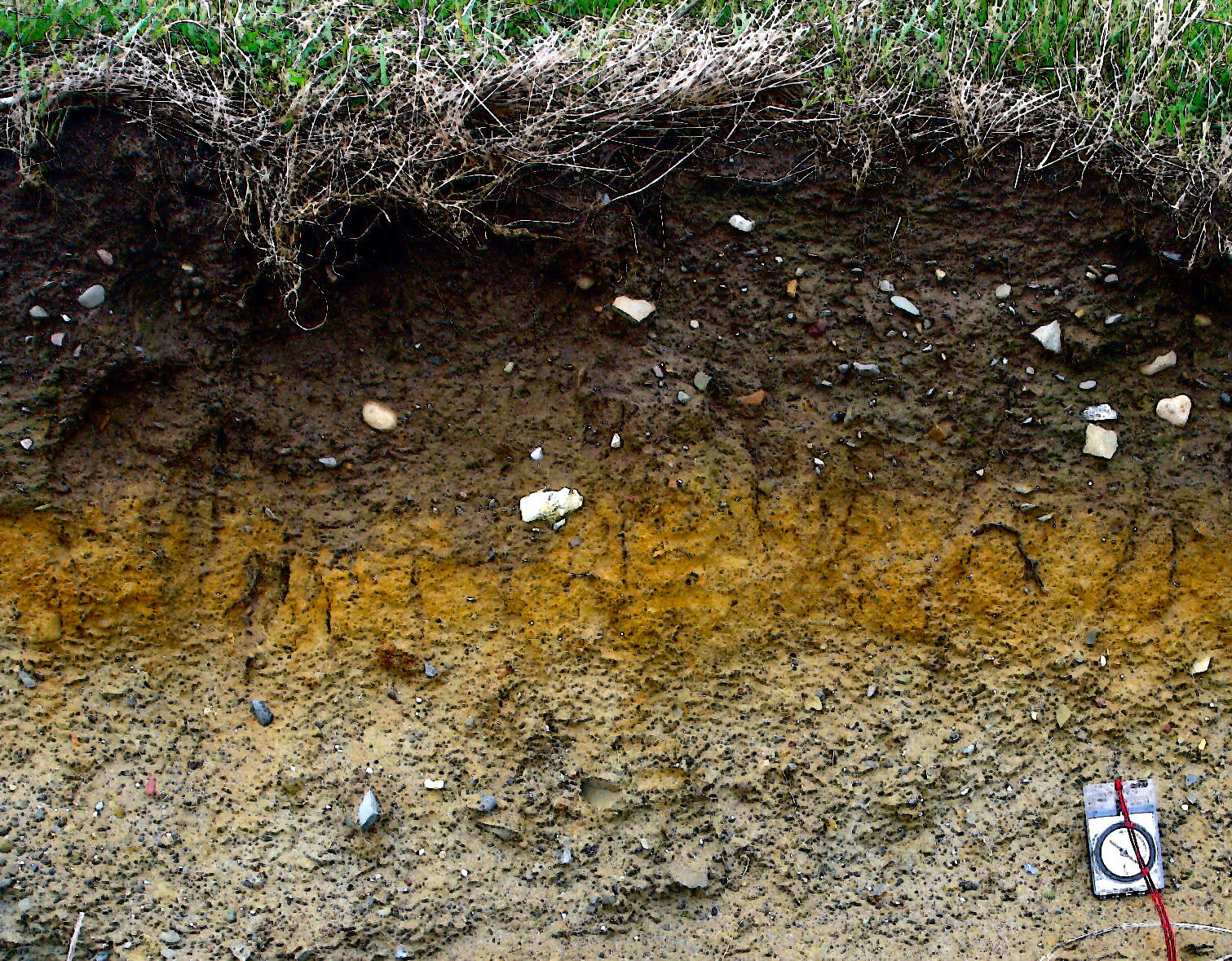
Soil, like air and water, is a vital resource for life on Earth. It keeps harmful chemicals out, allow plants and crops to grow on them, and clean the air. Soil takes thousands of years to form. Every 500 years, soil grows at least 1 cm thick. Soil is made up of weathered bedrock, and other materials on the surface. Other materials on the surface include sand, silt, and decomposed organisms, air water, and mineral particles. Without soil, life on earth wouldn't be possible.

SP8: Obtain, Evaluate, and Communicate Information:

This week, I obtained my information on soil through a provided website and textbooks on Earth Science. I also obtained my data by taking down notes from a video about soil. Then I used those notes to gather my data. I evaluated the validity of my data because all the sources of data was provided by the teacher. I communicated all the data I found to my team when we were working on our background research. I also communicated data on my team's background research document, showing the data I have collected.